
“Let us not become weary in doing good, for at the proper time we will reap a harvest if we do not give up.” Galatians 6:9
The trouble was—I had become just that: weary. On the outside, everything in my ministry at work looked the same. I identified myself as a Christian in the classroom, prayed for my students, and stood as an example of the compatibility between faith and science. But on the inside, I felt like I was going through the motions, following a careful script I crafted over the years.
“Pushing Her Religion”
Then, at the end of fall quarter, I received lower than usual student evaluation scores along with these comments:
“Religion and Christianity was frequently mentioned with references of non-consensual prayer for us as individual students”
“…mentioned her religion a lot more than reasonable and seemed to be pushing her religion onto her students which I did not appreciate”
I felt shocked and angry. Non-consensual prayer? I prayed for my students during a personal devotional time at home. I seethed—I didn’t need anyone’s permission for what I prayed to God. And as for “talking too much about religion” in a biology class—I only briefly mentioned my faith three or four times during the 10-week quarter.
Should I Continue?
As the next quarter approached, my anger transitioned to nervousness and uncertainty. Should I continue identifying as a Christian in my classroom? Would I receive lower evaluation scores again? Could those student comments and more like it get me into trouble? I prayed and decided to stick to my script.
Well, mostly.
I changed the way I prayed for my students. I use a notecard check-in—asking students, “How are you doing?”—to pray for them specifically. In the past, I told my students afterwards that I used the notecards to pray for them—hence the “non-consensual prayer” comment. And perhaps I did have some fear of telling them beforehand, unsure how that would be received.
Joyfully and Passionately
But this time, I told my students up front. When I passed out the notecards, I explained that as an expression of my personal faith I would like to pray for them—by name and for what they had written. I added, “If you are okay with that, put a check mark on the notecard.”
The response overwhelmed me. So many students thanked me for the prayers.
Students wrote out “please pray for my:” anxiety, stress, girlfriend, grandparents….And I did—joyfully and passionately—in a way I hadn’t felt in over a year. I identified a little with Joseph: what others intended for harm, God used for good.
As I kept praying about how much to say about my faith in the classroom, God freed me from my careful script. I was not obligated to go through the motions. Instead, I trusted in the Lord each day to guide me and found new strength to run and not grow weary, to walk and not faint.
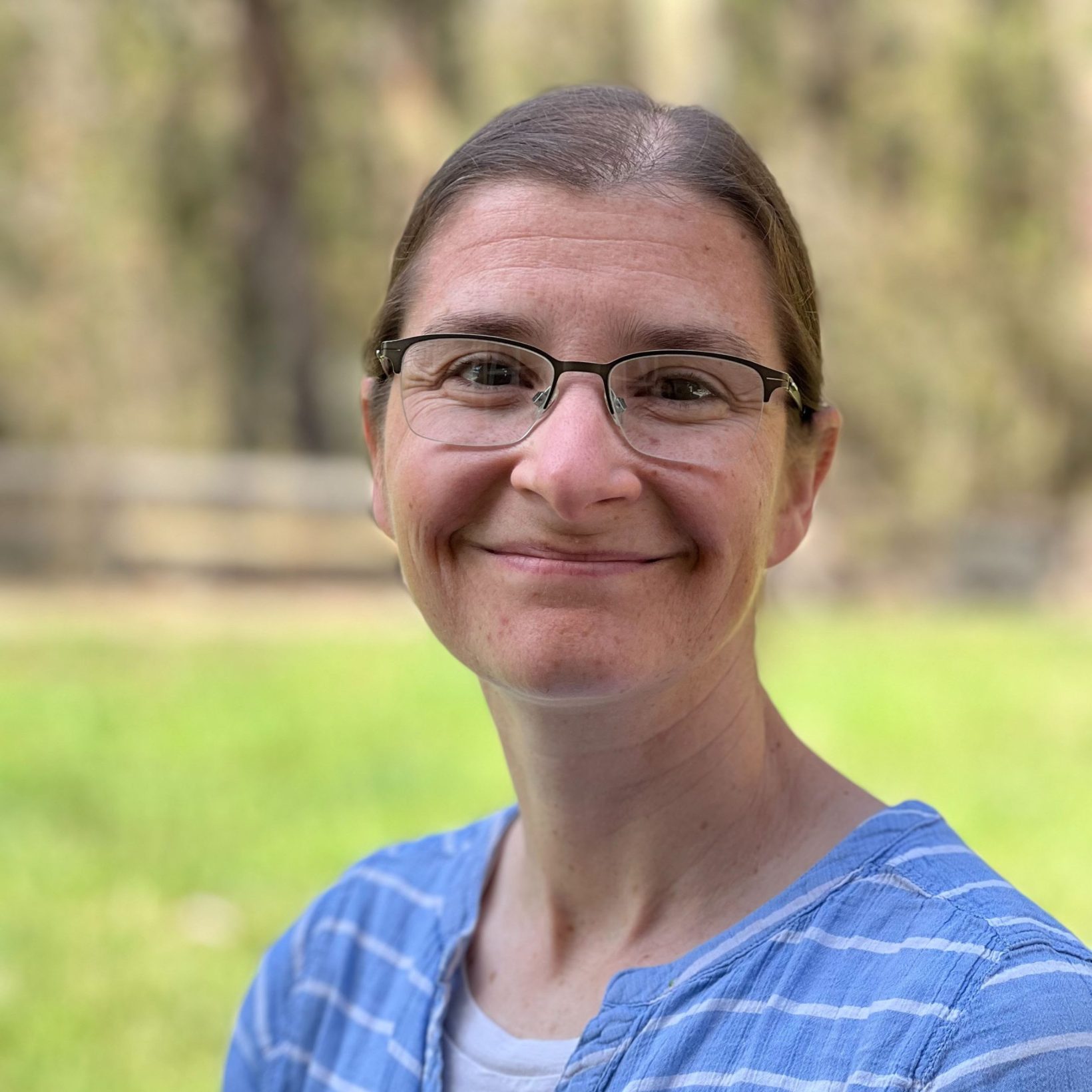
Heather DeBruhl
Biological Sciences
Cal Poly San Luis Obispo