Getting to Know Your Campus Questionnaire

You drive by the campus, and you wonder, what is it like? Who is there? What would it be like to be in the hallways? How can I serve this school? It might be a little intimidating! When you enter a campus, you enter a different world. It can help your confidence and ministry a lot to do a little research before you navigate the halls for yourself. 

Ask an Insider

You can grab a yearbook and find out some helpful information. Mapping the Campus can help you there. Or you can ask campus insiders (e.g. students, school staff, or even involved parents) what you would like to know. Offer to buy a teacher a coffee and ask these questions. Go to a coffee shop or fast food restaurant close to the school when school lets out, and ask a few students to help you out. Students often respond well when an adult asks for help. You might say something like this, 

“I work with a student organization called Cru, and we would like to know how to best serve your school. I would love to hear your thoughts. Would you be willing to answer a few questions?”

  1. What is your school most known for within the community (e.g. academics, athletics, service, etc)?
  2. What top three groups seem to have the most influence on campus and why?
  3. Where do students hang out on campus? Off campus?
  4. What are the three to five biggest challenges students face at this campus?
  5. What are the ethnic/racial dynamics like on campus?
  6. What groups or clubs are at your campus?
  7. Are there other Christian groups on campus?
  8. Do spiritual values play any part in the school as a whole or in your school experience personally? If so, how? If not, why not? 
  9. If you were in my shoes, who would be the first person you would talk with on campus about Cru?

Listen well, ask follow up questions to gain a deeper understanding, and make a mental note of the things [the others] say.

Five Types of People to Interview

As you get to know your campus, you will run into all kinds of people who know about and care about the campus. Interview as many as you can, but here are five types of people with whom you should make sure you connect:

  1. A teacher, administrator, or coach
  2. A local youth pastor
  3. A Christian parent
  4. A Christian student
  5. A non-Christian student

Each of these people will give you a different perspective on the campus and will help you grow your understanding of this new mission field as you develop your network of insiders.

More Than One Way to Do a Questionnaire

As you interview people, be respectful of the person’s time. You do not have to ask all the questions all at once. Keep them in the back of your mind and ask just one or two in casual conversation as you meet people. Listen well, ask followup questions to gain a deeper understanding, and make a mental note of the things they say. It might even lead to an opportunity to continue the conversation at a later time or a chance to uncover spiritual interest.

Happy investigating! As you learn about the school, pray. Ask God to show you where He is already working and to lead you as you seek a place to begin. Can you help meet one of the challenges students face? Did you meet a Christian student who might have a desire to reach their campus? Follow up and meet the first person students or staff recommend that you meet. God loves the students on this campus more than you do, and He will be faithful to lead you as you move forward.

Next Step
Ask a parent, teacher or teen you know to help you discover the campus by completing the questionnaire with you.

RECENT POSTS

Campus Ministry Toolkit: Skills and Tools to Reach your School
Simple skills and tools to help you start conversations, share your faith, and build a movement on your campus.
Ask a Coach – Tips from an Expert
Some of our favorite tips from our best coaches to help you take the next step in reaching your school.
The 25-Foot Banana Split: A Crowd-Gathering Outreach
Gather a crowd and share the Gospel with a massive, gutter-sized dessert that students build together.
Campus Ministry Toolkit: Skills and Tools to Reach your School

As you learn to reach your school, there are some key ministry skills that will make a big difference. These are things every Christian student can grow in and you don’t have to be perfect to get started. We also have some great tools to help you take your next step. With a little courage and the right resources, you’ll be amazed how God can use you in your school.

Starting Spiritual Conversations

Bringing up spiritual topics can be hard, but it’s one of the most important steps in reaching your friends. If no one starts the conversation, most students will never talk about their faith.

  • Solarium: A deck of picture cards to help you start conversations about life and God.

Sharing Your Testimony

Your story matters. Sharing what God has done in your life can open hearts and help others realize that faith is personal and real.

Sharing Your Faith

The gospel is powerful and your friends need to hear it. Learning how to clearly explain the message of Jesus is a huge step in making your faith your own and helping others follow Him. 

  • How to Share the Gospel (article): a step-by-step guide to help you share the gospel with a friend.
  • Connecting with God Booklet: A short, simple booklet you can read through with a friend to explain how they can know Christ.
  • The Four Wristband: A wearable tool with four simple symbols to help you talk about God’s love and how to receive Christ.
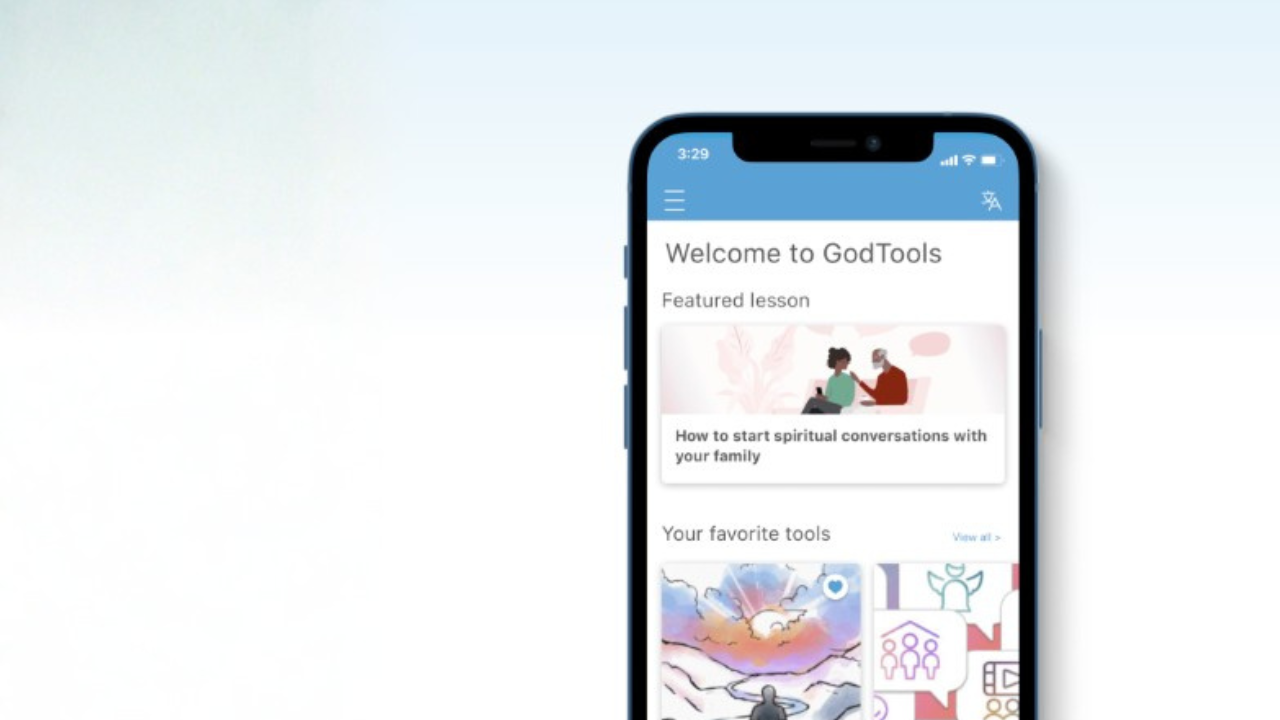
  • GodTools App: A free app with interactive ways to share your faith in different languages and styles.

“You don’t have to be perfect to start reaching your school.”

Following Up a New Believer

When someone accepts Christ, they need help knowing what to do next. Helping a new believer grow in their faith is one of the most rewarding things you can do.

Leading a Small Group

Small groups are a powerful way to build community and help students grow. If you can lead a good conversation, you can lead a small group.

  • Thrive Studies App: Includes dozens of studies on real-life topics and built-in leader training.

Campus Ministry Training

Reaching students on your campus is one of the most strategic ways to share your faith. Learning a few simple principles can help you start conversations, gather students, and take steps toward building a movement at your school.

  • Campus Training Videos – Short, practical videos to help you learn how to reach students on your high school campus. These eight trainings cover key topics like meeting students, starting conversations, sharing your faith, and taking simple steps to build a movement.

Other helpful tools

You can find links to these tools at cru.org/gotothecampus/…or scan the code below.

Next Step
Pick one tool and take a step this week to start a conversation or gather a few friends.
Ask a Coach – Tips from an Expert

Starting a ministry on your campus is an exciting step, but it can also raise a lot of questions. What should you do first? How do you find students who are interested? What if your group is small or things do not go the way you expected?

This is where a coach can help. A campus ministry coach is someone who has experience helping students and leaders start and grow ministries on high school campuses. They listen to what you are facing, help you think through wise next steps, and connect you with helpful tools and resources along the way.

Throughout the Reach Your School Playbook, you will see short insights from coaches who have spent years helping students reach their campuses. This page gathers more of those tips in one place so you can learn from their experience and keep moving forward.

Below are practical coaching tips from leaders who have walked this road before. As you read, look for what applies to your situation right now and take your next step. You can get your own coach by emailing us at coachingcenter@cru.org. We’d love to help.

Starting a ministry on your campus can feel overwhelming, but you do not have to figure it out alone.

Coaching Tips

  • Ask a few non-Christian friends how they would respond to your ideas, then process those same questions with Christian friends to sharpen your thinking.


  • Evangelism is the engine of your ministry, and helping students influence others is how you build future leaders.


  • You don’t have to figure this out alone, there are people with experience who would love to help you gather students and get the word out.


  • You have rights on campus, learn them, then live them out with confidence.


  • Many people are looking for something bigger than themselves, so give them a vision worth joining.


  • You may be walking past someone God is preparing, start a conversation and see what He does.


  • Pray Scripture, if God says it, you can pray it, and keep prayers short so more people can participate.


  • Invite a coach to join your team early, it will help you move faster and avoid common mistakes.


  • Use the tools available to you, there are helpful resources for sponsors, leaders, and teams if you ask.


  • When meeting with school leaders, bring others with you so it’s clear you’re building something together.


  • Be curious, kind, helpful, and bold, those four traits open doors.


  • Work with your school, not against it, staff can often help you more than you expect.


  • Teams help you reach more people, save time, and build momentum.


  • If your school allows non-curricular clubs, they must allow a Christian club too.


  • Use tools and visuals that help people remember and apply what they learn.


  • Create environments people actually want to be part of, whether on campus or off.


  • Use social media, simple graphics, and personal invites, everyone plays a role in getting the word out.


  • Have a clear process for identifying and developing student leaders.


  • Work within school expectations for roles, but organize your team in a way that actually helps you function.


  • Start outreach where you already have relationships, teams, clubs, and shared interests.


  • Use response cards or forms to follow up, gather feedback, and invite people into next steps.


  • If God is nudging you to take a step, go for it, but bring others with you.


  • Parents can be powerful allies, don’t be afraid to involve them.


  • Always have a next step ready so you can invite people while they’re still engaged.

Next Step

Do you have any questions for our coaches? If so, ask your question here, or request a coach for your ministry by emailing us at coachingcenter@cru.org!

Contact Us
The 25-Foot Banana Split: A Crowd-Gathering Outreach

There is something magnetic about a 25-foot long dessert. It’s an event designed to draw a large number of people because it’s fun, energetic, and everyone loves ice cream. The 25-Foot Banana Split works because it’s a high-visibility activity that breaks down barriers and creates a natural platform for you to introduce your ministry, share a personal testimony, and present the Gospel. It’s less about a formal meeting and more about an unforgettable shared experience that leaves students wanting to come back for more.

Outreach Tips

  • Start advertising at least a week or two before the event. Use social media, classroom announcements, and high-visibility flyers. Have your students invite their friends – word of mouth is always your best advertising.
  • Buy new vinyl rain gutters from a hardware store. They are lightweight, cheap, and easy to snap together. You’ll use a long line of tables to spread them out over 25 feet.
  • You don’t need to cut the gutters to hit your exact footage. Just overlap the ends of the 10-foot sections until you reach your desired length. It’s faster and keeps the gutters reusable for next time!
  • Line the gutters thoroughly with heavy-duty aluminum foil. If you line it well, cleanup is a breeze. You just roll up the foil and toss it. If you don’t, you’ll spend an hour scrubbing chocolate syrup out of plastic tracks.
  • To keep things sanitary, line the foil-covered gutters with individual bowls. Students build their split inside their own bowl within the gutter track. It’s safer, healthier, and much more practical.
  • Set up your tables so students can access the gutters from both sides. This doubles your space and makes the event feel much more high-energy.
  • Use this simple formula: Estimate 2 feet of gutter for every person per side. When you put people on both sides, you can roughly estimate 1 foot per person. So if you expect 30 people to show up, you’d want roughly 30 feet (15 people on each side of the banana split)
  • Keep the ice cream in deep coolers until the very moment the “Build” begins. This ensures students are scooping ice cream, not soup.

Sample Shopping List (For 25 Feet)

  • Infrastructure: 3x 10ft vinyl gutters, 2 rolls of heavy-duty aluminum foil, 50-75 Styrofoam or plastic bowls.
  • Food: 4–5 gallons of vanilla ice cream, 25–30 bananas, 3 large bottles of chocolate syrup, 4 cans of whipped cream, 2 jars of cherries, and 1 large container of sprinkles.
  • Hardware: 10–12 ice cream scoops and a large box of plastic spoons.
  • Hospitality: Name tags and markers for the welcome table.

Sample Outreach Schedule

  • 6:30 PM: Setup & Construction: The crew assembles the gutters (overlapping them), lines them with foil, and places the individual bowls inside. Position tables to allow access from both sides.
  • 7:00 PM: Welcome & Hangout: As students arrive, have leaders at a welcome table with name tags. Greet everyone, introduce yourself, and help new people feel welcomed.
  • 7:15 PM: Game: Kick off a high-energy game to get everyone laughing and comfortable.
  • 7:30 PM: Testimony & Gospel Talk: A student shares their story, followed by a Gospel presentation. Have everyone fill out their comment cards before moving over to the banana split. It is often helpful to randomly draw from the comment cards at the end and give away a few simple prizes. It helps motivate people to fill out the cards.
  • 7:45 PM: The Great Build: After you collect comment cards, invite everyone to find a place at the banana split. Give students a 5-minutes to build their best banana split using the scoops and toppings. Consider giving prizes for the most creative, ugliest, or best “Team build” sundaes.
  • 7:50 PM: The “Dig-In”: Everyone grabs a spoon, takes their bowl, and hangs out.
  • 8:10 PM: Cleanup: Roll up the foil, toss the mess, and you’re done!

The 25-Foot Banana Split is a classic campus outreach for a reason: it’s visual, it’s collaborative, and it’s delicious.

Activity: The Student-Led Build

The magic of this event is that the students are the ones building it. Instead of watching leaders make a sundae, the students share the scoops, pass the chocolate syrup, and collaborate on a massive scale. By giving them a time limit (e.g., “You have 5 minutes to build the best section!”), you create a fun, chaotic energy. Using individual bowls inside the gutter track keeps things hygienic while maintaining the visual of one continuous, massive dessert.

Pre-Event Games

To get the energy up before the big build, run one or two “Banana Split” themed games. These are designed to be funny, messy, and great for capturing photos for social media.

The “Human Sundae” Challenge: This is the ultimate messy-factor game. Lay two or three brave volunteers down on a plastic tarp on their backs. Give them a trash bag “poncho” to protect their clothes. Their partner has 60 seconds to build the most “beautiful” sundae—directly in the volunteer’s mouth! Use whipped cream, chocolate sauce, sprinkles, and a cherry on top. The crowd votes on the most artistic (or most hilarious) creation.

  • Pro-Tip: Keep paper towels and a “wash station” (a bucket of water or wet wipes) nearby for the volunteers!

The “Blindfolded Feed-Your-Friend”: This is a classic for a reason. One student sits in a chair wearing a trash bag “poncho.” Their partner stands behind them, blindfolded, and reaches their arms around the seated person’s neck (like they are the seated person’s arms). The blindfolded “arms” then have to try to feed the seated person a small bowl of ice cream with chocolate syrup and whipped cream. The first team to finish the bowl wins.

Short Talk and Gospel Transition

Since the ice cream is still tucked away in the coolers, the students will be attentive. Have a student or leader give a 3-5 minute talk.

  • The Hook: “We all love a massive dessert like this because we’re all looking for things that satisfy us. We look for it in food, in grades, in relationships, or in our weekend plans.”
  • The Pivot: “But just like this banana split, those things are ‘sweet’ for a moment and then they’re gone. We’re left hungry for something more.”
  • The Gospel: Briefly share how Jesus offers a satisfaction that doesn’t fade. Explain how we can have a relationship with God through Him.
  • The Close: “To help us plan better events and to get your spoon, take 30 seconds to fill out the card in your hand. We’d love to connect with you this week.”

Comment Cards

Hand these out during the talk. Make sure everyone has completed their card before the build begins. This is your primary way to see who is interested in a Bible study or wants to know more about the Gospel.

After the Event

  • The 24-48 Hour Rule: Contact every student who indicated interest on their comment card within two days.
  • Coffee Appointments: Meet up with those who had spiritual questions to go through a Gospel booklet.
  • Invite to Community: Personally invite attendees to your next small group or weekly meeting.
Next Step
Discuss the outreach with your student leaders and pick a high-traffic date. Purchase your supplies: Buy vinyl gutter sections, heavy-duty foil, bowls, and plenty of plastic spoons. Gather your ingredients: Calculate your needs based on your 25-foot (or 100-foot!) goal.

Share This Post

More to Explore