Why Reach Teenagers? Because They’re Hurting, Searching, and Ready

Teenagers are searching. They’re hurting, curious, and wide open to the kind of hope only Jesus can offer. Many are silently asking, Who am I?, Do I matter?, What’s real? In a world that offers endless noise and few real answers, students are desperate for someone to show up, listen, and point them toward something solid.

If we care about reaching people, we have to care about reaching teenagers. They’re in one of the most vulnerable, formative stages of life and they’re more open to spiritual conversations than most adults. Teenagers aren’t just the future of the Church, they’re the present mission field. When you reach a student with the gospel, you don’t just change their story, you help rewrite every story their life will touch.

And practically speaking, almost every person passes through a high school. If we focus on reaching students, we’re planting the gospel in places that impact entire communities.

Copy of Launch Hourglass (3)

A Tolerant Generation

This generation is incredibly open. Gen Z places a high value on acceptance, self-expression, and individual freedom. They believe people should be free to define their own truth and identity, and while that leads to less judgment, it also means more confusion. With so many competing voices, teenagers are searching for something solid to build their lives on.

  • Moral Relativism: 60% of Gen Z say what is morally right or wrong “depends on what an individual believes.”
  • Moral Flexibility: 61% say happiness is the ultimate goal in life, and morality changes based on society.
  • Moral Independence: Only 4% of Gen Z hold a biblical worldview. Most are building their moral beliefs from personal experience, feelings, and cultural trends.

This tolerance creates spiritual openness but also reveals a desperate need for clarity and truth.

“Teenagers are searching. They’re hurting, curious, and wide open to the kind of hope only Jesus can offer.”

A Lonely Generation

Despite being more digitally connected than any generation before them, today’s teens are deeply lonely. Social media, performance pressure, and isolation have taken a toll on their mental and emotional health. Many feel unseen, anxious, or numb. They’re not just scrolling for entertainment, they’re searching for belonging.

  • Constant Screen Use: Nearly half of teens (46%) say they are online “almost constantly.”
  • Bullying Prevalence: In 2021, 1 in 6 high schoolers were bullied at school, and 16% were cyberbullied.
  • Rising Sadness: 42% of U.S. high schoolers reported persistent feelings of sadness or hopelessness in 2021.
  • Suicide Crisis: Every 100 minutes, a teenager takes their own life.

Behind the selfies and TikToks is a generation quietly asking, “Do I matter?” The gospel speaks directly to that ache.

“Behind the selfies and TikToks is a generation quietly asking, ‘Do I matter?’”

An Open Generation

The very pressures that have left teens lost have also left them spiritually hungry. Teens are asking deep questions about meaning, identity, and purpose. They may be less religious, but they’re not less curious. This is a generation wide open to spiritual conversations—especially when they are honest, respectful, and centered on Jesus.

  • Interest in Jesus: 77% of U.S. teens are at least somewhat motivated to learn more about Jesus.
  • Pain Driving Spiritual Curiosity: 49% say their generation is more curious about faith because of the challenges they’ve faced.
  • Desire for Meaning: 52% say they are actively searching for purpose in life.
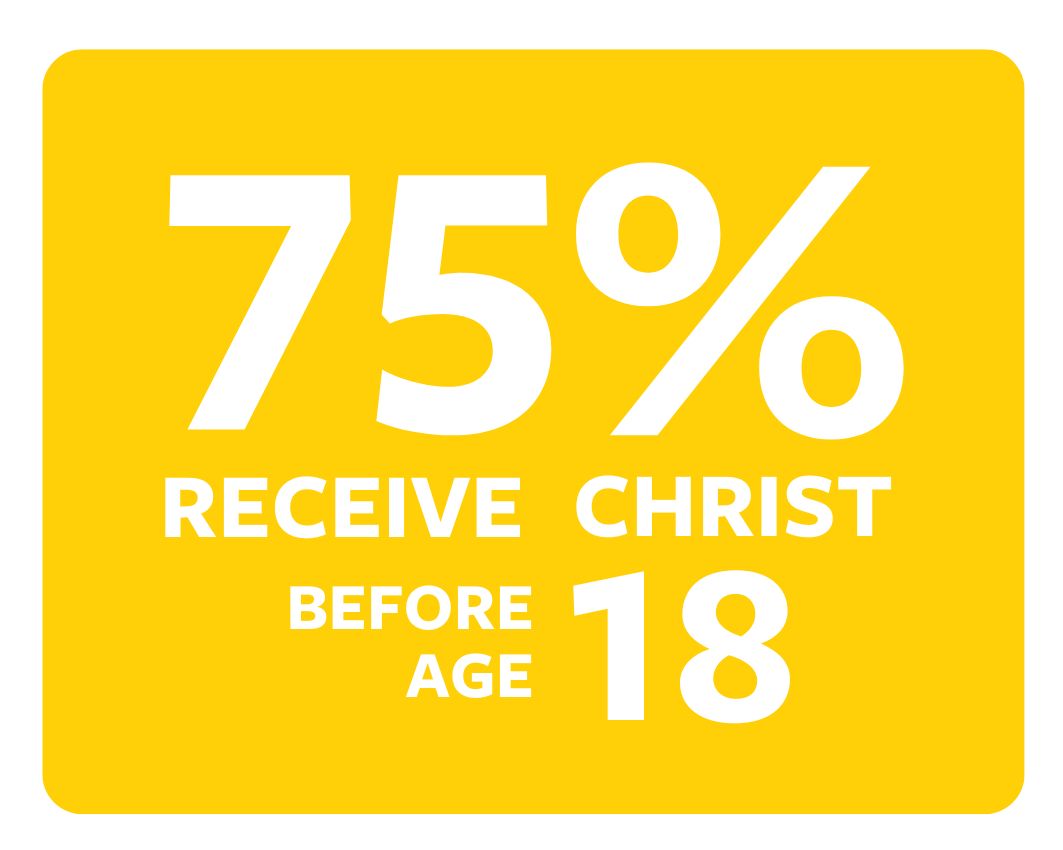
  • Gospel Urgency: “About three fourths of all people who have consciously, intentionally, and personally chosen to embrace Jesus Christ as their Savior did so before their 18th birthday.” – George Barna

If we don’t step in with truth, someone else will fill that gap with counterfeit answers. Now is the time to meet them where they are.

“If we don’t step in with truth, someone else will fill that gap with counterfeit answers.”

Reaching Everyone

If you wanted to reach everyone with the gospel in any given city, where would you go? Is there a place where everyone goes?

Almost the entire population goes through middle schools and high schools at some point. Reaching those campuses is one of the most strategic things we can do.

In Cru, we want to give everyone a chance to know someone who truly follows Jesus. This is our plan. We go to the local middle or high school and take steps of faith to serve and share the gospel with teenagers.

Why do we go to the local schools? Because that is where all the teenagers are! They are asking the questions, and we believe Jesus has the best answers. They are hurting, and we believe that we can help.

The best time to share the gospel with someone is during their teenage years.
Copy of Copy of Copy of Copy of Untitled (2)

Conclusion

This generation is open. They’re hurting, curious, and more spiritually aware than we often realize. But they won’t find Jesus unless someone brings Him to them. That someone could be you.

When you reach a teenager, you reach more than a moment—you shape a lifetime. Their faith doesn’t stop at graduation. It grows, multiplies, and impacts the people around them. That’s why we go to the campus. That’s why we start here.

Next Step

Find out if there is a Cru ministry reaching teens near you, and consider how you can invest in reaching teens with us.

Find Cru Near You


RECENT POSTS

Resources for the Reach Your School Playbook
Campus Ministry Toolkit: Skills and Tools to Reach your School
Simple skills and tools to help you start conversations, share your faith, and build a movement on your campus.
Ask a Coach – Tips from an Expert
Some of our favorite tips from our best coaches to help you take the next step in reaching your school.
Campus Ministry Toolkit: Skills and Tools to Reach your School

As you learn to reach your school, there are some key ministry skills that will make a big difference. These are things every Christian student can grow in and you don’t have to be perfect to get started. We also have some great tools to help you take your next step. With a little courage and the right resources, you’ll be amazed how God can use you in your school.

Starting Spiritual Conversations

Bringing up spiritual topics can be hard, but it’s one of the most important steps in reaching your friends. If no one starts the conversation, most students will never talk about their faith.

  • Solarium: A deck of picture cards to help you start conversations about life and God.

Sharing Your Testimony

Your story matters. Sharing what God has done in your life can open hearts and help others realize that faith is personal and real.

Sharing Your Faith

The gospel is powerful and your friends need to hear it. Learning how to clearly explain the message of Jesus is a huge step in making your faith your own and helping others follow Him. 

  • How to Share the Gospel (article): a step-by-step guide to help you share the gospel with a friend.
  • Connecting with God Booklet: A short, simple booklet you can read through with a friend to explain how they can know Christ.
  • The Four Wristband: A wearable tool with four simple symbols to help you talk about God’s love and how to receive Christ.
  • GodTools App: A free app with interactive ways to share your faith in different languages and styles.

“You don’t have to be perfect to start reaching your school.”

Following Up a New Believer

When someone accepts Christ, they need help knowing what to do next. Helping a new believer grow in their faith is one of the most rewarding things you can do.

Leading a Small Group

Small groups are a powerful way to build community and help students grow. If you can lead a good conversation, you can lead a small group.

  • Thrive Studies App: Includes dozens of studies on real-life topics and built-in leader training.

Campus Ministry Training

Reaching students on your campus is one of the most strategic ways to share your faith. Learning a few simple principles can help you start conversations, gather students, and take steps toward building a movement at your school.

  • Campus Training Videos – Short, practical videos to help you learn how to reach students on your high school campus. These eight trainings cover key topics like meeting students, starting conversations, sharing your faith, and taking simple steps to build a movement.

Other helpful tools


Next Step
Pick one tool and take a step this week to start a conversation or gather a few friends.
Ask a Coach – Tips from an Expert

Starting a ministry on your campus is an exciting step, but it can also raise a lot of questions. What should you do first? How do you find students who are interested? What if your group is small or things do not go the way you expected?

This is where a coach can help. A campus ministry coach is someone who has experience helping students and leaders start and grow ministries on high school campuses. They listen to what you are facing, help you think through wise next steps, and connect you with helpful tools and resources along the way.

Throughout the Reach Your School Playbook, you will see short insights from coaches who have spent years helping students reach their campuses. This page gathers more of those tips in one place so you can learn from their experience and keep moving forward.

Below are practical coaching tips from leaders who have walked this road before. As you read, look for what applies to your situation right now and take your next step. You can get your own coach by emailing us at coachingcenter@cru.org. We’d love to help.

Starting a ministry on your campus can feel overwhelming, but you do not have to figure it out alone.

Coaching Tips

  • Ask a few non-Christian friends how they would respond to your ideas, then process those same questions with Christian friends to sharpen your thinking.


  • Evangelism is the engine of your ministry, and helping students influence others is how you build future leaders.


  • You don’t have to figure this out alone, there are people with experience who would love to help you gather students and get the word out.


  • You have rights on campus, learn them, then live them out with confidence.


  • Many people are looking for something bigger than themselves, so give them a vision worth joining.


  • You may be walking past someone God is preparing, start a conversation and see what He does.


  • Pray Scripture, if God says it, you can pray it, and keep prayers short so more people can participate.


  • Invite a coach to join your team early, it will help you move faster and avoid common mistakes.


  • Use the tools available to you, there are helpful resources for sponsors, leaders, and teams if you ask.


  • When meeting with school leaders, bring others with you so it’s clear you’re building something together.


  • Be curious, kind, helpful, and bold, those four traits open doors.


  • Work with your school, not against it, staff can often help you more than you expect.


  • Teams help you reach more people, save time, and build momentum.


  • If your school allows non-curricular clubs, they must allow a Christian club too.


  • Use tools and visuals that help people remember and apply what they learn.


  • Create environments people actually want to be part of, whether on campus or off.


  • Use social media, simple graphics, and personal invites, everyone plays a role in getting the word out.


  • Have a clear process for identifying and developing student leaders.


  • Work within school expectations for roles, but organize your team in a way that actually helps you function.


  • Start outreach where you already have relationships, teams, clubs, and shared interests.


  • Use response cards or forms to follow up, gather feedback, and invite people into next steps.


  • If God is nudging you to take a step, go for it, but bring others with you.


  • Parents can be powerful allies, don’t be afraid to involve them.


  • Always have a next step ready so you can invite people while they’re still engaged.

Next Step

Do you have any questions for our coaches? If so, ask your question here, or request a coach for your ministry by emailing us at coachingcenter@cru.org!

Contact Us

Share This Post

More to Explore