Ingredients of a Champion

Introduction

What are some things that come to mind when you think of a winner or a champion?

Coach Terry Bowden coached over 300 college football games over a span of 4 decades. In 1993, he led Auburn to a perfect 11-0 season and said that his team’s success boiled down to one word… attitude. To remind him of the importance of attitude, Coach Bowden carried this article around with him throughout the season.

“Attitude: The longer I live, the more I realize the impact of attitude on life. Attitude, to me, is more important than the past, than education, than money, than circumstances, than failures, than successes, than what other people think or say or do. It is more important than appearance, giftedness, or skill. It will make or break a company… a church… a home.

The remarkable thing is we have a choice every day regarding the attitude we will embrace for that day. We cannot change our past. We cannot change the fact that people will act in a certain way. We cannot change the inevitable. The only thing we can do is play on the one string we have, and that is our attitude. I am convinced that life is 10 percent what happens to me and 90 percent how I react to it. And so it is with you. We are in charge of our attitudes.”

– Charles Swindoll

Attitude determines how we respond to challenges and opportunities in life. Today, we’re going to talk about three key ingredients of a winning attitude. Each of these ingredients begins with a D, and each of them makes a major contribution to individual and team success both on and off the field.

Determination is the ability to stick with it and persevere in the face of challenges and setbacks.

The Three D’s

Who can tell me who Florence Griffith-Joyner is?

“Flo-Jo” is often considered the fastest woman who ever lived. She set the world record for both the 100 meters and 200 meters way back in 1988, records that still stand to this day. (To give you some perspective, the men’s 100M record has been broken 14 times since 1988!)

Shortly after winning the gold medal at the 1988 Olympics, Flo-Jo was asked to what she attributed her success. She replied, “Desire, Dedication, and Determination.” Those three D’s are what I’m going to talk to you about today.

1. Desire

How would you define “desire?”

Desire can be difficult to define, but you know if you have ever experienced it. It is an urge, an impulse, a longing to experience or accomplish something. It motivates you to strive and sacrifice for the result you are hoping for. There is an expression in Spanish to do something “con ganas,” which literally means “with desire,” but expresses so much more. It might be better translated to “put your guts into it,” or “give it all your strength.”

To be successful as a player, as a team, or in life you need desire. How strong is your desire to compete in your sport?

Check out this story about a 13-year-old boy who went on to become the greatest scorer in NCAA basketball history:

“I began to eat and sleep with my basketball by my side. I was so dedicated to perfecting my skills that when Mom came in to kiss me good night, without fail I was lying in bed shooting the ball to the ceiling. and catching it. I’m sure she heard me repeating, ‘fingertip control, backspin, follow-through … fingertip control, backspin, follow-through.’ As Mom said good night, she would tuck the ball under my arm, as some mothers would a child’s teddy bear, then turn out the light. Sleep didn’t come easily because my mind constantly churned new ideas regarding the ball-handling and dribbling drills my dad had taught me that day.”

This 13-year-old boy was none other than “Pistol” Pete Maravich, who in 3 years between 1968-1970 averaged 44 points per game and scored a total of 3667 points … A record that stands to this day.

Ted Williams – one of the greatest hitters in baseball history – said this: “All I want out of life is that when I walk down the street folks will say, there goes the greatest hitter that ever lived.”

· What do you want people to say about you?

· How strong is your desire to achieve success?

The first ingredient is desire – you’ve gotta want it!

2. Dedication

The second ingredient is dedication.

Desire will only take you so far. To be successful, you must have the dedication to actually follow through on that desire. You have to actually do it! Dedication is often what separates average players and teams from champions.

Bobby Knight put it this way: “The will to win is the most over-estimated phenomenon in sport. It’s not the will to win – everyone wants to win. It’s the will to prepare to win that makes winners.”

A lot of people want to win, but aren’t willing to pay the price. There has never been a great sports champion who wasn’t dedicated – Steph Curry, Michael Phelps, Peyton Manning – all of these guys had or have intense regiments of training that helped them reach their desired goals.

What about you? Are you willing to work hard to win? If coach was to ask you to do some extra drills after practice, what would your attitude be?

Ok, let’s review:

· The first ingredient: Desire

· The second ingredient: Dedication

3. Determination

Our final ingredient is determination. This is the ability to stick with it and persevere in the face of challenges and setbacks. Every great champion has had to overcome challenges and failures along the way. The examples are endless: Many of you have probably heard the story about Michael Jordan. As a sophomore he was unable to make the varsity basketball team. Apparently, there were 15 kids better than him at his high school. Jordan turned that into motivation. He worked out relentlessly, became the best player on the JV team, and a year later was the undisputed leader of the varsity squad.

Many of you may know that Tom Brady was drafted in the 6th round of the NFL draft, the 199th pick overall. Every NFL franchise had the opportunity to select Brady and passed, multiple times. Tom used that snub as motivation throughout his NFL career, winning 7 Super Bowls (more than any NFL franchise) and becoming arguably the greatest NFL player of all-time.

· What is your attitude?

· Are you easily side-tracked or are you determined to press on?

To be a champion in life requires desire, dedication, and determination in every area of your life- the physical, the mental, and the spiritual.

Conclusion

Let’s review the 3 D’s:

· Desire

· Dedication

· Determination

Ask yourself where you can apply these ingredients to help you achieve your goals. Also, what about applying it to other areas of your life so you can excel off the field as well.

To be a champion in life requires desire, dedication, and determination in every area of your life- the physical, the mental, and the spiritual. A lot of professional athletes have acknowledged the key role spiritual motivation has played in their success – players like Clayton Kershaw, Steph Curry, and Cooper Kupp. These guys have learned how to strike a balance in these three areas of their life.

Cru is an organization that supports students who want to develop the spiritual area of their lives. Addi (Cru student leader) has been involved for the past 4 years and she and our Cru staff team want to invite anyone who is interested to hear a bit more about Cru and how we seek to serve students in our community. If anyone is interested, we will have pizza and popsicles tomorrow after practice and share a little bit more about Cru and how we can grow as spiritual champions as well.

Comment Cards

Thanks again for having us, coach. I do have just one favor to ask. We’re going to pass out some brief comment cards. We would love it if you could take about 2 minutes to give us some honest feedback about the talk today. It is always helpful for us to know what students find most helpful, as well as what topics you might be interested in hearing about. There is also a place on the card where you can provide your contact information if you would like a reminder text about our pizza and popsicle event taking place outside the locker room tomorrow after practice. Thanks, guys. Best of luck with the remainder of your season.

Next Step

Decide on a team for a team talk, and offer this talk or Successful Teams to the coach.

team talksuccessful teams


RECENT POSTS

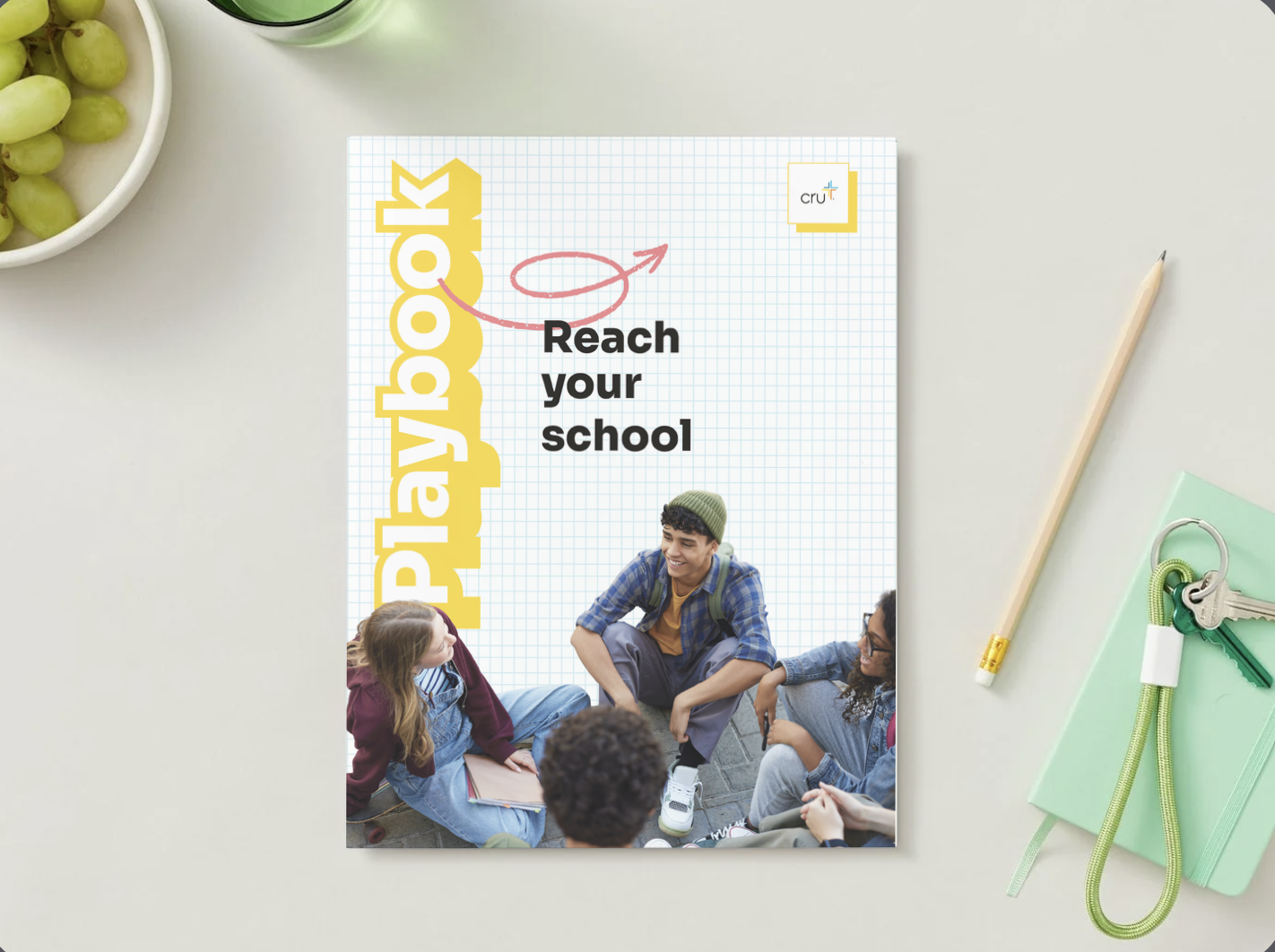
The Reach Your School Playbook
A simple, step-by-step guide to help students, and the adults who support them, start and grow a movement to reach their school.
Comment Cards 101: Capture Interest, Build Relationships
A simple guide to using comment cards to capture student interest, build relationships, and follow up effectively after any event.
Student Leader Application and Covenant
Two optional documents to help you identify, prepare, and support student leaders with clarity and consistency.
The Reach Your School Playbook

You want to make a difference at your school. You care about your friends. You see the need. You’ve probably even thought, “Someone should do something.”

What if that someone is you?

The Reach Your School Playbook was created to help students take that step, and to give adults a simple way to support them along the way.

Made for Students, Helpful for Adults

This Playbook is designed first for students. It helps you take ownership, lead your friends, and build something that actually reaches your school.

At the same time, if you’re an adult, youth leader, parent, or volunteer, this gives you a clear way to come alongside students without taking over.

  • Students lead
  • Adults support
  • Everyone moves forward together

Why Most People Don’t Start

A lot of students never take the first step. Not because they don’t care, but because they feel stuck.

  • “Where do I even begin?”
  • “What if no one shows up?”
  • “How do I get others involved?”

Uncertainty can keep people from moving. This Playbook breaks that barrier. It gives you a clear path so you can stop overthinking and start doing.

What This Helps You Do

This isn’t just ideas sitting on a page. It’s a practical guide you can actually use right now.

With the Playbook, you can:

  • Start something meaningful, even if you’re on your own
  • Gather a few friends and build momentum
  • Share your faith in natural, real ways
  • Lead with confidence, even if you’ve never led before
  • Build something that lasts beyond you

You don’t have to have it all figured out. You just need a place to start.

“Start where you are, use what you have, take the first step.”

A Simple Path to Follow

The Playbook walks you through five clear steps. Each one is simple, practical, and designed to help you take action.

  • DREAM: Start with a vision for your school and what God could do there
  • PRAY: Learn how to pray for your campus in real, meaningful ways
  • GO: Take action, gather a team, and begin reaching people
  • GROW: Build a group that develops leaders and multiplies
  • SEND: Help others step out and reach their friends too

You don’t have to guess what to do next. It’s right there in front of you.

Built to Be Used, Not Just Read

This isn’t a long manual you’ll never finish. It’s short. It’s simple. It’s designed to move you forward.

  • Easy to read
  • Clear next steps
  • Real examples
  • Space to think and act

You can go through it on your own, or walk through it with a couple of friends. Adults can use it to guide conversations and help students take ownership.

You Don’t Have to Do This Alone

Starting something can feel intimidating. But you’re not on your own. The Playbook connects you to tools, coaching, and a bigger movement of people who are doing the same thing. Take one step, and you’ll find support along the way.

Start Today

You don’t need a perfect plan. You just need a first step.

Next Step
Download the Playbook with the button above and walk through the first section this week with a friend!
Comment Cards 101: Capture Interest, Build Relationships

Why Comment Cards Matter

The most important thing you do in ministry isn’t running events, it’s building relationships. Big gatherings are great, but they aren’t personal. Comment cards help you bridge that gap. They give students a simple way to raise their hand and say:

  • “I’m interested”
  • “I want to get involved”
  • “I want to talk”
  • “I made a decision”

A comment card is more than a form. It’s a filter. The event gathers the crowd, but the comment cards reveal the ones who are ready. Instead of guessing who’s interested, students tell you. And that’s what allows you to follow up personally and meaningfully.

Download Comment Cards

Physical vs. Digital Comment Cards

You can collect information digitally, but physical cards still win.

Physical Cards

  • Higher response rate
  • Easier to complete in the moment
  • No distractions
  • Feels more intentional

Digital Options

  • Students are less likely to fill them out
  • Distractions
  • Technical glitches

Digital can work, but many ministries find they get about half the responses compared to physical cards. Even in a digital world, physical cards often get better results. If you want the most responses, go physical first.

“The card isn’t the win, the conversation is.”

How to Use Comment Cards

1. Pass Them Out at the Right Moment
Usually at the end of a meeting or outreach, when interest is highest.

2. Give Everyone a Pen or Pencil
Don’t assume students have one. They won’t.

3. Walk Through the Card Together
This is huge. Once everyone has a card, read each section out loud and guide them:

  • “Write your name here”
  • “Check this if you want to get involved”
  • “Check this if you prayed to receive Christ”

If you don’t do this, students rush through and check random boxes.

4. Give Them Time to Complete It
Pause. Let them actually fill it out.

5. Collect Them Immediately
Don’t leave it optional or vague.

Use Incentives to Increase Response

Want more cards turned in? Use prizes.

  • Gift cards
  • Snacks
  • Fast food coupons
  • Free merch

Tell them:
“Turn in your card, we’ll draw for prizes.”

It works. A simple prize can double your response rate.

Best Practices That Make a Big Difference

Use cardstock
Regular paper tears or gets ruined. Cardstock holds up better.

Keep it simple
Too many options overwhelm students.

Look through cards immediately
Scan for:

  • Students who want to get involved
  • Spiritual decisions
  • Urgent needs

If possible, connect with them before they leave the meeting. The best practice is to follow up within 24–48 hours. After that, interest fades fast. So if. you can talk with them before they leave and set up a time to connect again in the next day or so, you will get your best results.

Turning Cards Into Conversations

A comment card is just the beginning. The goal isn’t collecting information. The goal is connection. Use what they checked to guide your follow-up:

  • Grab lunch
  • Meet after school
  • Start a Bible study
  • Have a gospel conversation

Final Thought

Comment cards can feel like a small detail, but they might be one of the most important things you do at an event. They help you move from a crowd, to a conversation, to a changed life.

Next Step
Download a comment card and use it at your next meeting.
Student Leader Application and Covenant

Strong student leadership doesn’t happen by accident.

Whether you’re a student leading your peers or an adult supporting a movement, clarity around leadership can make a huge difference. These simple documents are designed to help you communicate expectations, invite the right students in, and build a healthy leadership culture.

They’re optional tools for any campus movement, not requirements, but many teams find them incredibly helpful.

Student Leadership Application

This application is a simple way for students to express interest in leadership and for you to get to know them better. It creates space for students to share their story, their faith, and why they want to lead. It also helps ensure they understand the purpose and message of your ministry before stepping into a leadership role.

Leaders often use this as a starting point for conversations, discernment, and development, not just as a form to collect.

Student Leadership (Editable Document)
Student Leadership Application (PDF)

“Great leadership starts with clarity, not assumptions.”

Model Student Covenant

This covenant helps define what it means to be a student leader in your group. It clearly communicates expectations, both in character and commitment, and gives students a chance to step in with understanding and ownership. Because it’s customizable, you can adapt it to fit your local context, adding practical expectations that make sense for your team.

Many leaders use this as part of training or onboarding, helping students not just say “yes” to leadership, but understand what they’re saying yes to.

Model Student Covenant (Editable Document)

Next Step
Review these documents and choose one to use with your leadership team this semester:

Share This Post

More to Explore