Your Testimony is an Amazing Story
We love movies, books, and TV series that depict the lives of others. Stories teach us, encourage us, and challenge us as we see life from another perspective. Most of all, hearing a story that we can relate to reminds us that we are not alone.
A testimony is simply the story of how you have seen God work in your life. It can be the story of when you first put your faith in Christ, or it could be the story of what God is doing in your life right now. Your testimony demonstrates the love of Jesus and how having a relationship with Him has changed you or impacted your life. Your testimony can be a powerful tool to help others know Christ.
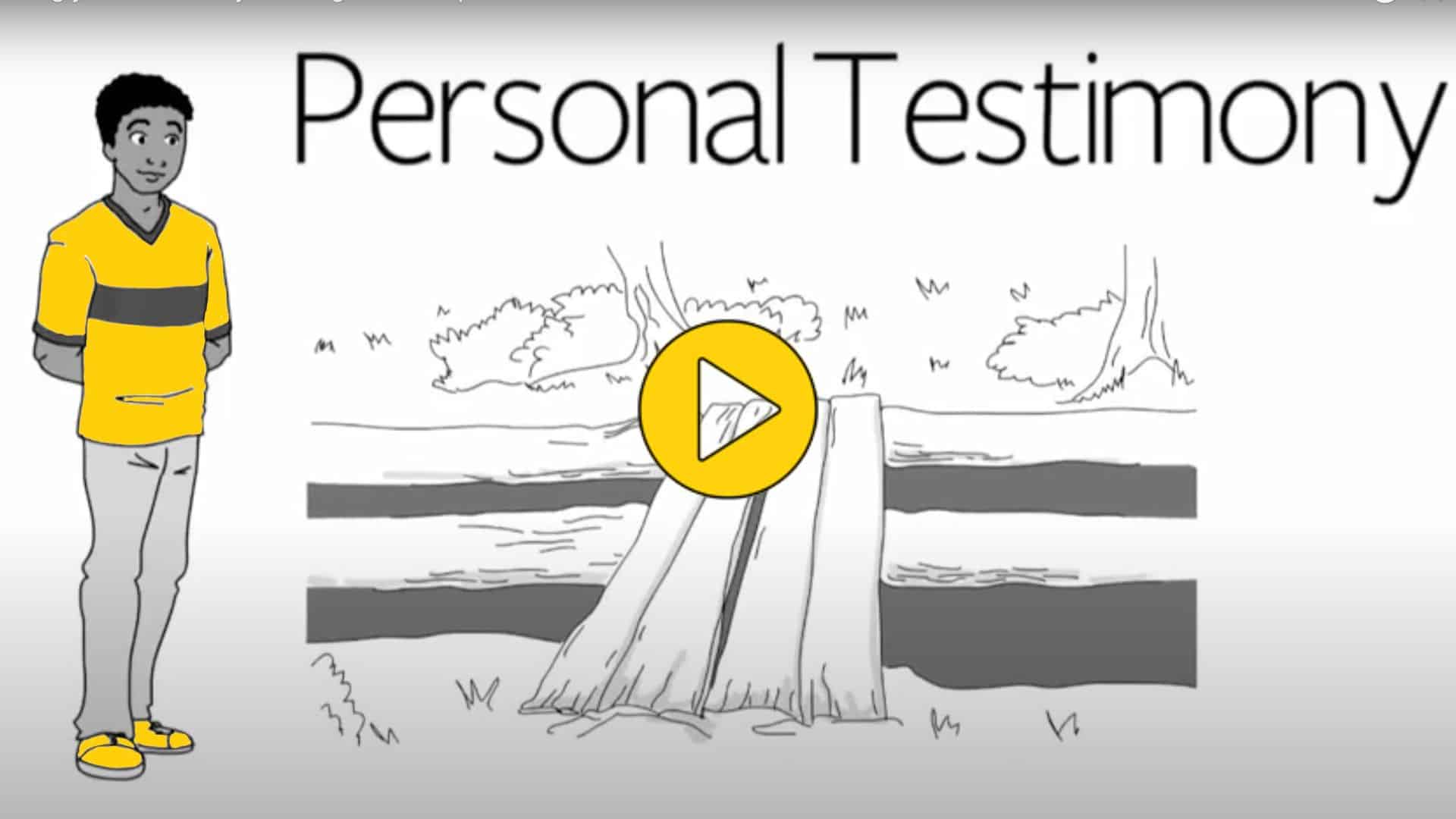
Proclaiming the great things Jesus has done for you can take many different forms. You can share your testimony with a friend over coffee, post about it on social media, or speak about it at your church or Cru club. Christina, a high school student, has seen God at work in her life and wanted to share her story with others through a video.
Check out her story below.

Whether your testimony looks like Christina’s or not, we all have a story. God wants to use your testimony to help others on their faith journey. Ready to share your testimony, but not sure how to start? We have you covered. Look below to learn why and how to share your story.
Example of a Testimony – Katie’s Story
In high school, Katie felt pressure to be the perfect student, the perfect athlete, and the perfect daughter. As soon as she got an A on one test, there would be another test on the following day. If she won one tennis match, soon there would be another match. Katie constantly felt anxious and exhausted trying to keep up this level of perfection that she thought was expected of her.
A turning point came when she went to a Christian camp for athletes. Speakers shared how someone could put their faith in Jesus to forgive the things they have done against God. Other students shared their joys and struggles with genuineness and authenticity. Katie learned that God would never love her more or less than He did at that moment. His love for her was not dependent on her performance. It was so freeing.
After trusting in Jesus as her Lord and Savior, Katie was so excited. She had hope for the future knowing God would be with her through any challenges she might face. Katie felt relief knowing God did not expect perfection. On her own, she could never attain perfection, but that is why Jesus died on the cross. He died for her shortcomings and promised new life with Him. Although life with Jesus was not instantly easier, it was better because she did not have to do it alone.
Ultimately, it was the love of God displayed through others that helped bring Katie into a relationship with Jesus. You could be that same example of God’s love for someone else.
Using a Theme in Your Story
When you begin to put your personal story together, think about any general themes that may surface. Themes are important because they are the “connection points” to the experiences of others. These connection points help people relate to what we are saying and reveal where they need God in their own life. Below are some themes that relate to the human condition across all cultures and ages. Can you think of any themes that have caused trouble in your life? Do any of these themes relate to you? You may find that more than one theme applies to you.
Universal Testimony Themes
- Love and Acceptance: Who loves me? Where do I find my worth?
- Purpose of Life: Why am I here?
- Forgiveness: Who could ever forgive me? How could I forgive him/her?
- A change of heart/attitude: When did my faith become my own?
- Satisfaction: What can satisfy me? What makes me fulfilled?
- Hope: Where do I find hope and joy?
- Identity: Who am I? Where do I find my identity? (sports, music, etc)
- Peace/Freedom from Anxiety: how do I deal with my anxiety?
Figure out the biggest theme in your own story, where God has done the most work in your life. Knowing the theme will give your story direction.
Pro Tip: Once you have used one theme, come back and see if another theme also fits your story. God works in many ways through our stories and it is likely that more than one theme will fit your story. Try a few others to share different parts of your story with others!
Putting Your Story Together
Once you have your theme, you can put your story together. When we are talking about sharing your testimony, we are specifically talking about a time when God moved in your life – especially when you first came to Jesus. There are three parts to every testimony:
Part 1 – What was your life like before Jesus?
Part 2 – What happened when Jesus changed your life?
Part 3 – How has your life changed since you came to know Jesus?
Write it out
Take some time to think about each of these parts and begin writing out your story. Think about how your theme has played out in each of these three parts.
Part 1 – What was your life like before Jesus?
Talk about what life was like in the area of your theme before Jesus entered your life. Talk about the events leading up to your acceptance of Jesus. For example, you were lonely, had guilt over things you had done, or never felt good enough.
Part 2 – What happened when Jesus changed your life?
Where were you and what was going on? Why did you decide to place your faith in Jesus? This is a good opportunity to emphasize the parts of the gospel that drew you to Him. When you clearly share how and why you accepted Jesus, you are explaining to your audience how they also can start a relationship with Him.
Part 3 – How has your life changed since you came to know Jesus?
Talk about what changed since you asked Jesus into your life. Use the theme to express the changes that have happened. Be careful not to make it sound like life is perfect, but do talk about the positive things you are experiencing now that Jesus is in your life.
Our printable Testimony Worksheet is a great tool to help you think through the different parts of your testimony. Use the buttons below to print it off or fill out your own copy online.
Your testimony demonstrates the love of Jesus and how having a relationship with Him has changed you or impacted your life.
What if I Don't Have a Story?
You do have a story! Even if you have been a Christian for most of your life, there were still tough times when you needed to depend on God. The struggle could be an inner problem or something that has happened to you. Think about how God has shown up for you through that.
- What was it like to experience this struggle?
- How did God show up for you?
- How have things changed since that time?
There are more ways to share your story than only telling about the moment you received Jesus. If you feel stuck, pray and ask God to reveal what he wants you to share. Remember, if you have Jesus, there is something that He wants to share through you!
For example, Brian’s life is going really well and he has not experienced any major upsets. However, he struggles with worry and anxiety over social media and body image. Brian knows Philippians 4 says, “do not be anxious about anything,” so he chooses to depend on God to give him peace by continually asking God for help. When Brian is telling his story, it shows others how God is meeting his needs every day through his struggle with anxiety.
The back side of the testimony worksheet will help those who think they do not have a story discover the story that God is writing for them.
Testimony Tips
- Pray about what to say, ask God for help, and get advice from someone who has done this before.
- Avoid specifically naming any church (positively or negatively) or saying the name of anyone who hurt you or let you down.
- Use words others can understand, and stay away from words only people who know Jesus use (“in my heart,” “saved,” “she witnessed to me”).
- If you have a church background, try to say it in a positive way.
- For example, “I was fortunate to be taken to church by my family, but I was not mature enough to fully understand what God was all about.”
- Be truthful, but leave out gross details of past choices or events.
- Make Jesus the focus of your story.
- It is important to be real about life after becoming a Christian. Things will not be perfect. There will always be problems but Jesus will be there to guide you through.
- For example, Brian would say, “I still struggle with anxiety sometimes, but God is helping me overcome it as I depend on Him.”
God wants to use your testimony to help others on their faith journey.
Tips for Speaking
- Pray before you get up to speak, and ask God to give you boldness as you talk.
- Talk loudly so you can be heard anywhere in the room, especially in the back.
- Give examples or experiences that the audience can understand.
- Do not read straight from your notes. Glance at them occasionally so that you know where you are in your story.
- If you are sharing in front of an audience, consider using a visual aid.
- Leave out details that are not important and respect the time you are given. People have a limited attention span, so keep it short!
- Have a closing sentence or verse, then STOP! 🛑
Be Ready to share your story
Memorize the First and Last Sentences
Often the most difficult parts of sharing your story can be the first and last sentences. We do not know how to start and we do not know how to stop talking. Consider memorizing your first and last sentences, then you will be able to open and close your talk in a clear and concise way. Write out those sentences word for word, memorize them, and be ready to use them when the time is right.
Practice It
Be sure to take the time to practice sharing your story a few times before you share it with a friend or in front of a group. Practice alone in your room and practice in front of a few trusted friends. The more you practice, the better it will be and the easier it will be to share your story when the moment arrives.
You Got This
When you have your story ready to go, God can use it at any moment! You may have one minute in passing, or you may have five minutes in front of an audience. There might also be an opportunity to have an extended conversation with someone. The point is to always be ready. 1 Peter 3:15 says, “Instead, you must worship Christ as Lord of your life. And if someone asks about your hope as a believer, always be ready to explain it.”
Next Step
Using the testimony worksheet, write out your own story and trust God for an opportunity to share it.
Testimony Worksheet