
Ingredients of a Champion

Introduction

What are some things that come to mind when you think of a winner or a champion?

Coach Terry Bowden coached over 300 college football games over a span of 4 decades. In 1993, he led Auburn to a perfect 11-0 season and said that his team’s success boiled down to one word… attitude. To remind him of the importance of attitude, Coach Bowden carried this article around with him throughout the season.

“Attitude: The longer I live, the more I realize the impact of attitude on life. Attitude, to me, is more important than the past, than education, than money, than circumstances, than failures, than successes, than what other people think or say or do. It is more important than appearance, giftedness, or skill. It will make or break a company… a church… a home.

The remarkable thing is we have a choice every day regarding the attitude we will embrace for that day. We cannot change our past. We cannot change the fact that people will act in a certain way. We cannot change the inevitable. The only thing we can do is play on the one string we have, and that is our attitude. I am convinced that life is 10 percent what happens to me and 90 percent how I react to it. And so it is with you. We are in charge of our attitudes.”

– Charles Swindoll

Attitude determines how we respond to challenges and opportunities in life. Today, we’re going to talk about three key ingredients of a winning attitude. Each of these ingredients begins with a D, and each of them makes a major contribution to individual and team success both on and off the field.

Determination is the ability to stick with it and persevere in the face of challenges and setbacks.

The Three D’s

Who can tell me who Florence Griffith-Joyner is?

“Flo-Jo” is often considered the fastest woman who ever lived. She set the world record for both the 100 meters and 200 meters way back in 1988, records that still stand to this day. (To give you some perspective, the men’s 100M record has been broken 14 times since 1988!)

Shortly after winning the gold medal at the 1988 Olympics, Flo-Jo was asked to what she attributed her success. She replied, “Desire, Dedication, and Determination.” Those three D’s are what I’m going to talk to you about today.

1. Desire

How would you define “desire?”

Desire can be difficult to define, but you know if you have ever experienced it. It is an urge, an impulse, a longing to experience or accomplish something. It motivates you to strive and sacrifice for the result you are hoping for. There is an expression in Spanish to do something “con ganas,” which literally means “with desire,” but expresses so much more. It might be better translated to “put your guts into it,” or “give it all your strength.”

To be successful as a player, as a team, or in life you need desire. How strong is your desire to compete in your sport?

Check out this story about a 13-year-old boy who went on to become the greatest scorer in NCAA basketball history:

“I began to eat and sleep with my basketball by my side. I was so dedicated to perfecting my skills that when Mom came in to kiss me good night, without fail I was lying in bed shooting the ball to the ceiling. and catching it. I’m sure she heard me repeating, ‘fingertip control, backspin, follow-through … fingertip control, backspin, follow-through.’ As Mom said good night, she would tuck the ball under my arm, as some mothers would a child’s teddy bear, then turn out the light. Sleep didn’t come easily because my mind constantly churned new ideas regarding the ball-handling and dribbling drills my dad had taught me that day.”

This 13-year-old boy was none other than “Pistol” Pete Maravich, who in 3 years between 1968-1970 averaged 44 points per game and scored a total of 3667 points … A record that stands to this day.

Ted Williams – one of the greatest hitters in baseball history – said this: “All I want out of life is that when I walk down the street folks will say, there goes the greatest hitter that ever lived.”

· What do you want people to say about you?

· How strong is your desire to achieve success?

The first ingredient is desire – you’ve gotta want it!

2. Dedication

The second ingredient is dedication.

Desire will only take you so far. To be successful, you must have the dedication to actually follow through on that desire. You have to actually do it! Dedication is often what separates average players and teams from champions.

Bobby Knight put it this way: “The will to win is the most over-estimated phenomenon in sport. It’s not the will to win – everyone wants to win. It’s the will to prepare to win that makes winners.”

A lot of people want to win, but aren’t willing to pay the price. There has never been a great sports champion who wasn’t dedicated – Steph Curry, Michael Phelps, Peyton Manning – all of these guys had or have intense regiments of training that helped them reach their desired goals.

What about you? Are you willing to work hard to win? If coach was to ask you to do some extra drills after practice, what would your attitude be?

Ok, let’s review:

· The first ingredient: Desire

· The second ingredient: Dedication

3. Determination

Our final ingredient is determination. This is the ability to stick with it and persevere in the face of challenges and setbacks. Every great champion has had to overcome challenges and failures along the way. The examples are endless: Many of you have probably heard the story about Michael Jordan. As a sophomore he was unable to make the varsity basketball team. Apparently, there were 15 kids better than him at his high school. Jordan turned that into motivation. He worked out relentlessly, became the best player on the JV team, and a year later was the undisputed leader of the varsity squad.

Many of you may know that Tom Brady was drafted in the 6th round of the NFL draft, the 199th pick overall. Every NFL franchise had the opportunity to select Brady and passed, multiple times. Tom used that snub as motivation throughout his NFL career, winning 7 Super Bowls (more than any NFL franchise) and becoming arguably the greatest NFL player of all-time.

· What is your attitude?

· Are you easily side-tracked or are you determined to press on?

To be a champion in life requires desire, dedication, and determination in every area of your life- the physical, the mental, and the spiritual.

Conclusion

Let’s review the 3 D’s:

· Desire

· Dedication

· Determination

Ask yourself where you can apply these ingredients to help you achieve your goals. Also, what about applying it to other areas of your life so you can excel off the field as well.

To be a champion in life requires desire, dedication, and determination in every area of your life- the physical, the mental, and the spiritual. A lot of professional athletes have acknowledged the key role spiritual motivation has played in their success – players like Clayton Kershaw, Steph Curry, and Cooper Kupp. These guys have learned how to strike a balance in these three areas of their life.

Cru is an organization that supports students who want to develop the spiritual area of their lives. Addi (Cru student leader) has been involved for the past 4 years and she and our Cru staff team want to invite anyone who is interested to hear a bit more about Cru and how we seek to serve students in our community. If anyone is interested, we will have pizza and popsicles tomorrow after practice and share a little bit more about Cru and how we can grow as spiritual champions as well.

Comment Cards

Thanks again for having us, coach. I do have just one favor to ask. We’re going to pass out some brief comment cards. We would love it if you could take about 2 minutes to give us some honest feedback about the talk today. It is always helpful for us to know what students find most helpful, as well as what topics you might be interested in hearing about. There is also a place on the card where you can provide your contact information if you would like a reminder text about our pizza and popsicle event taking place outside the locker room tomorrow after practice. Thanks, guys. Best of luck with the remainder of your season.

Next Step

Decide on a team for a team talk, and offer this talk or Successful Teams to the coach.

team talksuccessful teams

RECENT POSTS

How Do I Start a Cru Movement at My School?
Whether you want to do your own thing or become part of Cru, here’s how to start reaching your school for Christ.
Campus Ministry Toolkit: Skills and Tools to Reach your School
Simple skills and tools to help you start conversations, share your faith, and build a movement on your campus.
The Reach Your School Playbook
The main landing page for the Reach Your School Playbook, with links to buy print copies and download the Playbook and Appendix PDFs.
How Do I Start a Cru Movement at My School?

If you’ve got a vision to reach your school for Christ, you’re asking exactly the right question. Whoever you are, a student, teacher, youth pastor, college student, or concerned adult, here’s how to get started. There are two ways to go about it.

1. Do Your Own Thing

If you’d like to gather some friends, share your faith, and build something without any formal ties, just start with the playbook. The Reach Your School Playbook gives you everything you need to get started today.

2. Call Yourself Cru

If you’d like to use the Cru name and logos, and be part of a wider movement beyond just your campus, here’s what that looks like:


Doing Your
Own Thing

Being Called
Cru

Use the Cru name and logosNoYes
Need a coach to get startedNoYes
Part of the wider Cru movementNoYes
Get ongoing support from Cru staffNoYes
Can start today, no waitingYesStill fast — just a call first

"Whichever path you choose, you don’t have to figure it out alone."

How to Get Started

If you want to call yourself Cru, the way to get started is to connect with a coach, that’s how you register your movement. This is separate from anything your own school requires; if your campus has its own club registration process, you’ll still want to check with your school on that too.

A coach is a Cru staff member whose job is to walk alongside you as you get started. Here’s what working with a coach actually looks like from there:

  • It’s free. No cost involved, no catch.
  • No pressure. You reach out, someone gets back to you with information and answers your questions, and there’s no commitment required just to ask.
  • Go at your own pace. You and your coach agree on a rhythm together, whether that’s weekly, every other week, or monthly, usually in calls of about 20 to 30 minutes.
  • The calls are practical. Your coach checks in on how things are going, helps you work through whatever challenges you’re facing, brainstorms ideas with you, and prays for you.
  • Real experience backs it up. Coaches have spent years working directly with students, teachers, and other volunteers on campuses like yours.
  • You get resources. Training and tools to help you lead with confidence, even if this is your first time.
  • It fits around your life. Coaches build their availability around your schedule.

Through it all, you’re helping students hear about Jesus, grow in their faith, and go on to reach others too. And whether you’re the student or the adult in this story, you stay the one leading it. Your coach walks alongside you; the coach doesn’t take it over.

Check Out the Playbook

Whichever path you choose, the Reach Your School Playbook is worth having in hand. It walks you through four simple steps — DREAM, PRAY, GO, GROW — for building something that reaches your school.

Download the Reach Your School Playbook

Whichever path you choose, don’t wait until everything feels figured out. Gather a few friends, open the Playbook, or send that first email to a coach. The important thing is that you start. Somewhere out there, a student at your school is waiting for someone to notice them, and that someone could be you.

Next Step
Ready to call yourself Cru? Reach out to the Coaching Center today: Email coachingcenter@cru.org and say, “I’d like to have a coach please!” Or call 1-877-GO-CAMPUS
Campus Ministry Toolkit: Skills and Tools to Reach your School

As you learn to reach your school, there are some key ministry skills that will make a big difference. These are things every Christian student can grow in and you don’t have to be perfect to get started. We also have some great tools to help you take your next step. With a little courage and the right resources, you’ll be amazed how God can use you in your school.

Starting Spiritual Conversations

Bringing up spiritual topics can be hard, but it’s one of the most important steps in reaching your friends. If no one starts the conversation, most students will never talk about their faith.

Sharing Your Testimony

Your story matters. Sharing what God has done in your life can open hearts and help others realize that faith is personal and real.

Sharing Your Faith

The gospel is powerful and your friends need to hear it. Learning how to clearly explain the message of Jesus is a huge step in making your faith your own and helping others follow Him. 

  • How to Share the Gospel (article): a step-by-step guide to help you share the gospel with a friend.
  • Connecting with God Booklet: A short, simple booklet you can read through with a friend to explain how they can know Christ.
  • The Four Wristband: A wearable tool with four simple symbols to help you talk about God’s love and how to receive Christ.
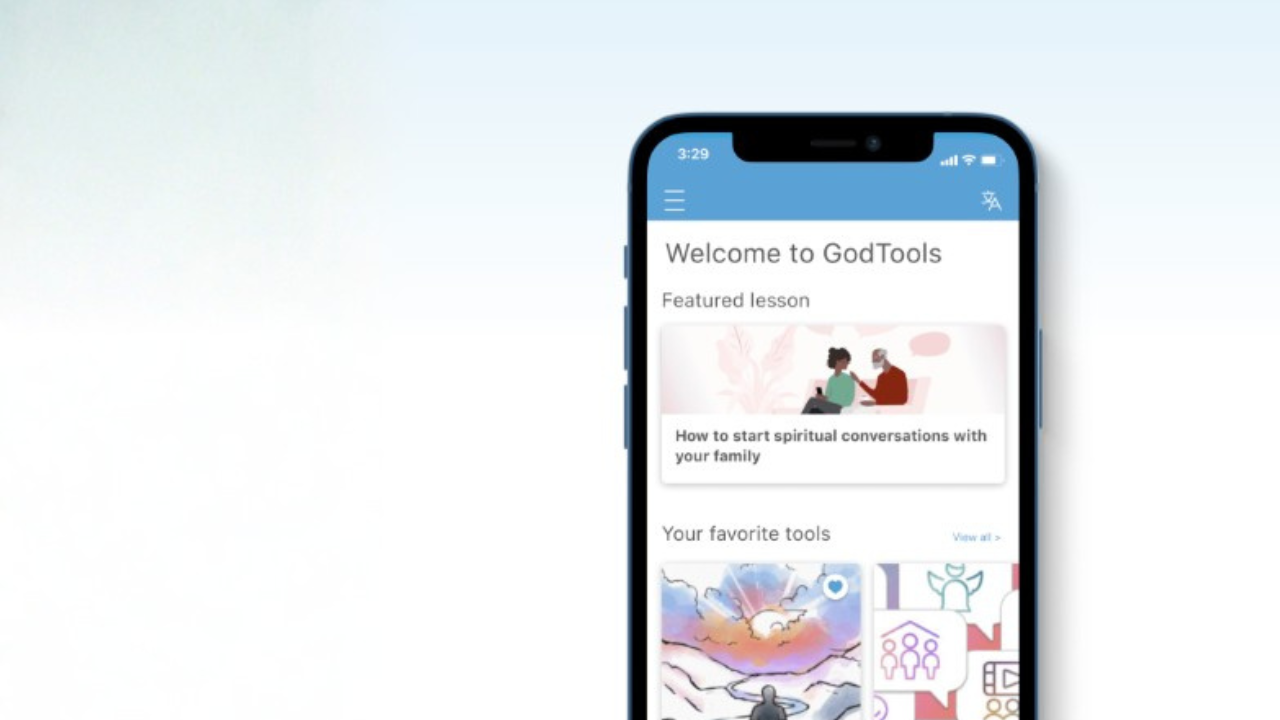
  • GodTools App: A free app with interactive ways to share your faith in different languages and styles.

“Your story could be the reason someone takes a step toward Jesus.”

Following Up a New Believer

When someone accepts Christ, they need help knowing what to do next. Helping a new believer grow in their faith is one of the most rewarding things you can do.

Leading a Small Group

Small groups are a powerful way to build community and help students grow. If you can lead a good conversation, you can lead a small group.

  • Thrive Studies App: Includes dozens of studies on real-life topics and built-in leader training.

Campus Ministry Training

Reaching students on your campus is one of the most strategic ways to share your faith. Learning a few simple principles can help you start conversations, gather students, and take steps toward building a movement at your school.

  • Campus Training Videos Short, practical videos to help you learn how to reach students on your high school campus. These eight trainings cover key topics like meeting students, starting conversations, sharing your faith, and taking simple steps to build a movement.

Other Helpful Tools

Some Great Websites You Don't Want To Miss

Next Step
Pick one tool and take a step this week to start a conversation or gather a few friends.
The Reach Your School Playbook

You can reach your school. We can help.

You’ve probably looked around your campus and thought, someone should do something. What if that someone is you?

The Reach Your School Playbook is a simple, practical guide that helps you make the first move. It’s short, clear, and built to move you forward, not a long manual you’ll never finish. Whether you’re a student ready to lead or an adult wanting to come alongside one, this is your starting point.

Screenshot 2026-07-27 at 4.41.07 PM

You can actually do this

Most people never start, not because they don’t care, but because they feel stuck. Where do I even begin? What if no one shows up?

The Playbook clears that away. It gives you a path so you can stop overthinking and start doing. You don’t need a perfect plan or all the answers. You don’t have to be the popular kid or have it all together. You just need a first step, and a little courage.

And the friends you’re thinking about right now matter. You might be the one who helps them find Jesus.

Start where you are. Use what you have. Take the first step.

A simple path to follow

The Playbook walks you through four clear steps, each one designed to help you take action:

  • Dream — Start with a vision for your school and what God could do there.
  • Pray — Learn to pray for your campus in real, meaningful ways.
  • Go — Take action, gather a team, and begin reaching people.
  • Grow — Build a group that develops leaders and multiplies.

It might start with a single conversation at lunch, or a few friends praying before class. You don’t have to guess what comes next. It’s right there in front of you.

Made for students, helpful for adults

The Playbook is written first for students, because we believe teenagers can lead and make a real impact at their school. But if you’re a parent, teacher, youth leader, or volunteer, you’re not on the sidelines. There’s a whole section just for you, whether you’re supporting a student who’s leading or stepping out to start something yourself.

Students lead. Adults support. Everyone moves forward together.

"Students lead. Adults support. Everyone moves forward together."

You’re not on your own

Starting something can feel intimidating. But you don’t have to figure it out alone. The Playbook connects you to tools, coaching, and a bigger movement of people doing the same thing. Take one step, and you’ll find support along the way.

Screenshot 2026-07-27 at 4.43.21 PM

Get the Playbook

So don’t wait until it all makes sense. Grab a copy below — get one for yourself, and consider extra copies for your key leaders.

Next Step
Download the Playbook, then invite a few friends to walk through the first section with you this week.

Share This Post

More to Explore