Best Practices for Relating to Minors

As a volunteer with the high school ministry of Cru, you can make a tremendous impact on the lives of teenagers within a movement.

You can literally steer students to where they will spend eternity, so these relationships cannot be treated lightly. And at the same time, teenagers typically gravitate toward adults or authority figures who are fun, engaging, and authentic. Students won’t relate to a robot. 

The relationships that you build with students carry significance. They can also have lasting consequences if not handled with care and intentionality. In light of this, here are six guiding principles to keep in mind as you develop relationships with middle and high school students.

1
Remember That You Are in a Position of Authority.

Your relationship is not a peer-to-peer interaction. Due to differences in age, experience, maturity, and your role, you automatically enter into a relationship with a student from a position of authority and leadership. This dynamic can look like that of an older brother or sister, but it is often much more like a teacher-student or coach-student friendship.

As a leader, it is very important for you to be a positive example of maturity. You want to be authentic and relatable, but not if it means lowering your behavior to match that of the students. Teenagers are very idealistic, and can quickly become disillusioned if you come across as inconsistent or immature.  It is important that we take this responsibility seriously.

2
Find Ways That Students Can Give to You.

With all the input you are making in the lives of students, it can be easy for these relationships to become somewhat unbalanced. You are helping and guiding them in many ways, but they also feel a need to contribute in some way to your life. 

Figure out what they can do to help and teach you. Be creative. They can teach you a new sport or game, show you a new TikTok dance, help you with a hobby, master new technologies, or offer you advice. In every case, your leadership and bond is enhanced when there is balance. It helps to have give-and-take in the relationship.

3
Set and Respect Appropriate Boundaries.

As a leader, you always want your relationships with students to be appropriate, both in practice and appearance.

You cannot expect high school students to meet all your friendship needs. You also cannot rely on your relationship with them (or ministry to them) to build your self-worth. It sounds silly, but it happens. 

Students can easily become dependent on you if you are the only voice they are hearing, so you want them to hear from a variety of godly men and women. You do not ever want to be seen as controlling or smothering their spiritual or personal growth. We want to see students become independently dependent on Christ.

It’s easy for students to grow fond of you and become emotionally attached, and crushes can sometimes develop. As such, be mindful of the ways and situations in which you interact with students. Cru’s standard practice is for guys to disciple guys and ladies to disciple girls. In addition, any serious counseling should be turned over to a Cru staff member of the same gender.

Refer to Cru’s safety procedures for more on this. Be wise and above reproach in all your relationships with students. This is both for the protection of students as well as the protection of you against any false accusations of impropriety.

Suggestion: Watch the Cru Volunteer Safety video (required for all Cru volunteers and staff).

4
Be Authentic and Transparent.

When building relationships with students, authenticity and transparency are not just helpful, they are essential! These practices create opportunities for students to be open and vulnerable because they have seen this modeled. However, as a leader, you want to be careful. 

Imagine your role model or mentor you admire shared too much about their struggles and brokenness with you. How would that make you feel?

When we are overly vulnerable with young people, they do not know how to handle it. It can easily make the conversation uncomfortable and bring awkwardness to the relationship. Students’ idealism and lack of experience make it hard for them to understand the more intimate, difficult aspects of adult life. 

You have the freedom to be honest and real, but we should share what is most helpful for the student and their growth.

5
Be Aware of How Things Might Appear.

As a leader, you always want your relationships with students to be appropriate, both in practice and in appearance.

You do not want people to be suspicious of your relationship with a student. Keeping kids out too late, having late-night text conversations, exaggerated physical affection, or even being alone with a student in private can be behaviors that can be concerning. 1 Thessalonians 5:22 says to avoid all appearance of evil. 

Ask yourself: “Could this decision/action cause parents, an administrator, or other students to distrust me in any way?”

6
Get To Know Students’ Families.

If you had an involved parent when you were a teenager, did you have any significant relationship with an adult whom your parents had never met? Probably not. You were likely asked, “Where are you going?” and “Who else is going?” whenever you left your home. 

Parents and guardians want to know their students’ friends, teachers, and coaches, but Cru leaders can unintentionally fly under the radar. Knowing a student’s family can enhance your ministry and relationship with the student by building trust and mutual support.

Beyond giving you an opportunity to minister to other family members, relationships with families can also expand your connections within and beyond the campus community. Parents and guardians can connect you with people who can offer financial and volunteer support to the movement. 

With these principles in mind, you can create meaningful connections with teenagers that will yield spiritual fruit in the years to come!

Now that you know how to relate to students, read about how you can begin to gather students on your campus!

Next Step

Now that you know these wise guidelines for relating to students, look a little further at how you can meet and relate to students.

meet and relate to students


Conversations
This article is part of the Conversation Collection. Read the rest of these articles to get an even better understanding of how to have great conversations with students.

RECENT POSTS

Resources for the Reach Your School Playbook
Campus Ministry Toolkit: Skills and Tools to Reach your School
Simple skills and tools to help you start conversations, share your faith, and build a movement on your campus.
Ask a Coach – Tips from an Expert
Some of our favorite tips from our best coaches to help you take the next step in reaching your school.
Campus Ministry Toolkit: Skills and Tools to Reach your School

As you learn to reach your school, there are some key ministry skills that will make a big difference. These are things every Christian student can grow in and you don’t have to be perfect to get started. We also have some great tools to help you take your next step. With a little courage and the right resources, you’ll be amazed how God can use you in your school.

Starting Spiritual Conversations

Bringing up spiritual topics can be hard, but it’s one of the most important steps in reaching your friends. If no one starts the conversation, most students will never talk about their faith.

  • Solarium: A deck of picture cards to help you start conversations about life and God.

Sharing Your Testimony

Your story matters. Sharing what God has done in your life can open hearts and help others realize that faith is personal and real.

Sharing Your Faith

The gospel is powerful and your friends need to hear it. Learning how to clearly explain the message of Jesus is a huge step in making your faith your own and helping others follow Him. 

  • How to Share the Gospel (article): a step-by-step guide to help you share the gospel with a friend.
  • Connecting with God Booklet: A short, simple booklet you can read through with a friend to explain how they can know Christ.
  • The Four Wristband: A wearable tool with four simple symbols to help you talk about God’s love and how to receive Christ.
  • GodTools App: A free app with interactive ways to share your faith in different languages and styles.

“You don’t have to be perfect to start reaching your school.”

Following Up a New Believer

When someone accepts Christ, they need help knowing what to do next. Helping a new believer grow in their faith is one of the most rewarding things you can do.

Leading a Small Group

Small groups are a powerful way to build community and help students grow. If you can lead a good conversation, you can lead a small group.

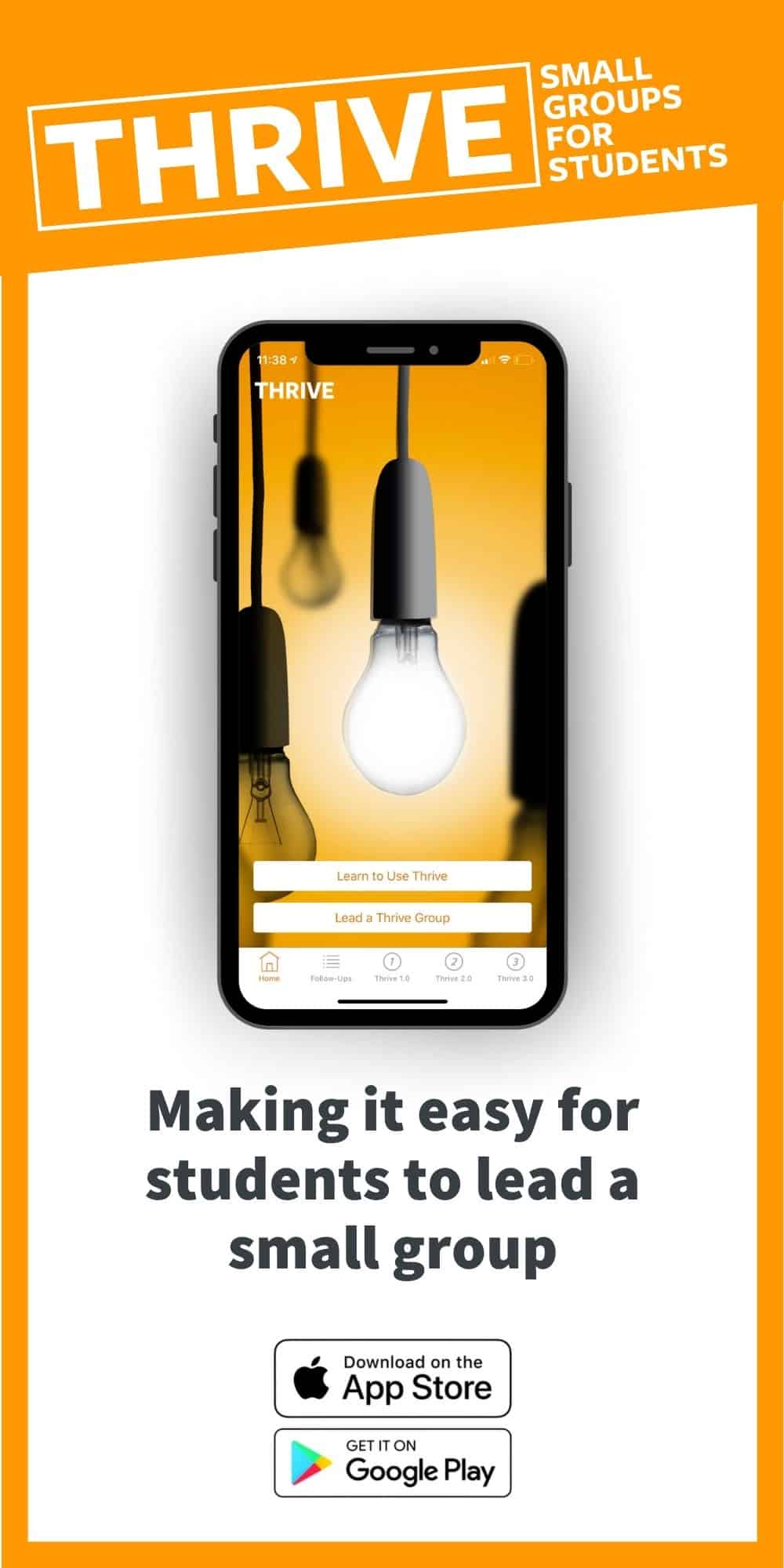
  • Thrive Studies App: Includes dozens of studies on real-life topics and built-in leader training.

Campus Ministry Training

Reaching students on your campus is one of the most strategic ways to share your faith. Learning a few simple principles can help you start conversations, gather students, and take steps toward building a movement at your school.

  • Campus Training Videos – Short, practical videos to help you learn how to reach students on your high school campus. These eight trainings cover key topics like meeting students, starting conversations, sharing your faith, and taking simple steps to build a movement.

Other helpful tools


Next Step
Pick one tool and take a step this week to start a conversation or gather a few friends.
Ask a Coach – Tips from an Expert

Starting a ministry on your campus is an exciting step, but it can also raise a lot of questions. What should you do first? How do you find students who are interested? What if your group is small or things do not go the way you expected?

This is where a coach can help. A campus ministry coach is someone who has experience helping students and leaders start and grow ministries on high school campuses. They listen to what you are facing, help you think through wise next steps, and connect you with helpful tools and resources along the way.

Throughout the Reach Your School Playbook, you will see short insights from coaches who have spent years helping students reach their campuses. This page gathers more of those tips in one place so you can learn from their experience and keep moving forward.

Below are practical coaching tips from leaders who have walked this road before. As you read, look for what applies to your situation right now and take your next step. You can get your own coach by emailing us at coachingcenter@cru.org. We’d love to help.

Starting a ministry on your campus can feel overwhelming, but you do not have to figure it out alone.

Coaching Tips

  • Ask a few non-Christian friends how they would respond to your ideas, then process those same questions with Christian friends to sharpen your thinking.


  • Evangelism is the engine of your ministry, and helping students influence others is how you build future leaders.


  • You don’t have to figure this out alone, there are people with experience who would love to help you gather students and get the word out.


  • You have rights on campus, learn them, then live them out with confidence.


  • Many people are looking for something bigger than themselves, so give them a vision worth joining.


  • You may be walking past someone God is preparing, start a conversation and see what He does.


  • Pray Scripture, if God says it, you can pray it, and keep prayers short so more people can participate.


  • Invite a coach to join your team early, it will help you move faster and avoid common mistakes.


  • Use the tools available to you, there are helpful resources for sponsors, leaders, and teams if you ask.


  • When meeting with school leaders, bring others with you so it’s clear you’re building something together.


  • Be curious, kind, helpful, and bold, those four traits open doors.


  • Work with your school, not against it, staff can often help you more than you expect.


  • Teams help you reach more people, save time, and build momentum.


  • If your school allows non-curricular clubs, they must allow a Christian club too.


  • Use tools and visuals that help people remember and apply what they learn.


  • Create environments people actually want to be part of, whether on campus or off.


  • Use social media, simple graphics, and personal invites, everyone plays a role in getting the word out.


  • Have a clear process for identifying and developing student leaders.


  • Work within school expectations for roles, but organize your team in a way that actually helps you function.


  • Start outreach where you already have relationships, teams, clubs, and shared interests.


  • Use response cards or forms to follow up, gather feedback, and invite people into next steps.


  • If God is nudging you to take a step, go for it, but bring others with you.


  • Parents can be powerful allies, don’t be afraid to involve them.


  • Always have a next step ready so you can invite people while they’re still engaged.

Next Step

Do you have any questions for our coaches? If so, ask your question here, or request a coach for your ministry by emailing us at coachingcenter@cru.org!

Contact Us

Share This Post

More to Explore